Quick Facts
Review and key takeaways
Review
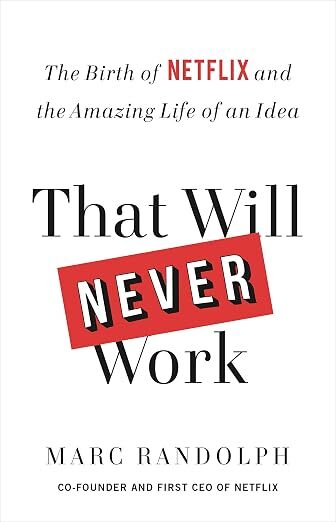
Marc Randolph co-founded Netflix and served as its first chief executive, and That Will Never Work is his account of how the company came to be. It is worth setting the scope out at the start, because it shapes everything about the book. This is an origin story, not a history of the empire. It runs from the earliest idea to the initial public offering, which means the famous chapters, the defeat of Blockbuster and the pivot that turned Netflix into a streaming giant, sit largely outside its frame. Readers arriving for those episodes should know they are barely touched.
That turns out to matter less than it might. The founding itself carries the book. Randolph walks through the unglamorous reality of starting a company: the long commutes spent tossing around business models, the ones that were obviously bad, the one that was merely improbable, and the messy work of turning a maybe into a mailer with a DVD inside. The decision to rent DVDs by post, and the scramble to prove the disc would even survive the journey, is genuinely gripping. It is a reminder that most iconic brands begin not with a grand vision but with a small, testable bet that a lot of sensible people said would never work.
The title is the point. Randolph builds the book around the idea that a good entrepreneur does not need certainty, only a willingness to test. That framing is where the book is most useful for anyone thinking about brands and businesses. It shows a brand being discovered rather than declared, shaped by what customers actually did with an early, imperfect product. The lesson is less about Netflix specifically and more about the discipline of running the experiment instead of defending the plan.
What sets the memoir apart, though, is its author's temperament. Randolph is refreshingly down to earth. Set against the run of founder and chief executive memoirs, so many of which polish their subject into a ruthless visionary, he comes across as approachable and self-aware. He owns his mistakes, credits the people around him, and does not oversell his own genius. He is candid about being pushed aside from the top job as the company grew, and he treats it with perspective rather than grievance. That honesty makes the book trustworthy in a genre that often is not, and it offers a quieter, more human model of what a founder can be.
The book is not flawless. Some passages drag, and a few stretches of early company-building read longer than the story needs. But the pacing dips never last, and the underlying candor keeps you reading. It is an easy book to recommend precisely because it is not trying to sell you a legend.
Read as the story of how Netflix actually started, and as a portrait of a founder who stayed grounded, That Will Never Work delivers. Read in hope of the streaming wars or the Blockbuster showdown, it stops well before the part you may have come for. Taken for what it is, an honest, well-told origin story, it earns its place on the shelf.
Key takeaways
Brands are discovered, not declared. Netflix did not begin with a finished vision. It began with a testable bet, DVD rental by post, and took shape from how customers responded. The brand followed the experiment rather than the other way around.
The title is the method. A good idea will attract plenty of people telling you it will never work. Randolph's argument is that certainty is not the entry ticket; a willingness to run the test and learn from it is.
A founder can stay grounded. Unlike many chief executive memoirs, this one is written by someone who owns his weaknesses, shares the credit and does not brag. It is a humane counterpoint to the ruthless-visionary archetype.
Know what the story leaves out. The book ends around the IPO, so the streaming pivot and the Blockbuster victory are largely absent. That keeps the focus tight on the founding, which is the part Randolph lived most closely.
Who should read this
This book is for founders, early-stage builders and brand people who want an honest look at how a company actually starts, before the myth-making sets in. It is especially rewarding for readers drawn to the idea of testing a brand into existence rather than planning it into place. Anyone tired of self-congratulatory executive memoirs will appreciate Randolph's grounded, self-deprecating voice. Readers hoping for the Netflix streaming saga or the fall of Blockbuster should look elsewhere, since the story deliberately closes before those chapters begin.
About the author