
A discarded lamp that rewrote IKEA's American voice
In September 2002, IKEA US released Lamp, a 60 second commercial directed by Spike Jonze and conceived by Crispin Porter + Bogusky in Miami.1, 2 The film opened the brand's first major American campaign platform under the line "Unböring" and set the editorial template that IKEA used to argue against attachment to old furniture for the years that followed.2 Lamp won the Grand Clio in 2003 and the Grand Prix in the Film category at the Cannes Lions International Advertising Festival the same year, beating Wieden+Kennedy London's Cog for Honda Accord, the favourite for the prize.3, 4
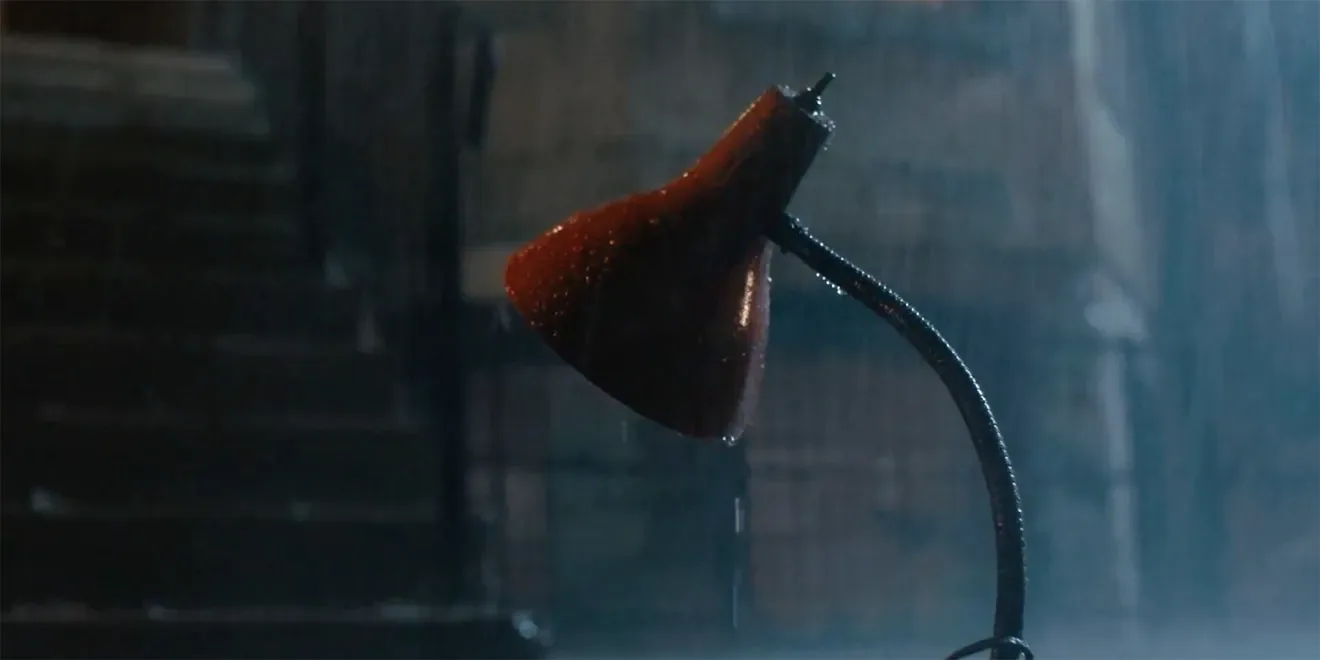
The narrative was deliberately small. A woman in a New York apartment unscrewed an old desk lamp, carried it down to the pavement, and placed it on the kerb in the rain. The camera lingered on the abandoned lamp from the lamp's own point of view. Jonze used a wide angle close-up, low ambient light, and the sound of rain on metal to build the audience's empathy with an inanimate object. After roughly 50 seconds of slow visual mourning, a Swedish man stepped into frame and broke the spell. Jonas Fornander, a non-actor cast at Jonze's request, looked into the camera and said: "Many of you feel bad for this lamp. That is because you crazy. It has no feelings. And the new one is much better."1, 5
The strategic problem
Crispin Porter + Bogusky took the IKEA US account in 2002 from Carmichael Lynch, which had succeeded Deutsch, the agency behind the brand's earlier American work, including the 1994 Dining Room commercial.1, 2, 6 The strategic brief was to address two cultural barriers that limited IKEA's American growth. The first was an attachment to existing furniture as inherited or symbolic, particularly furniture that had been bought once and was expected to last a lifetime.1 The second was a residual perception that an IKEA store was a destination for students or first-time renters rather than for adult homemakers.
The Unböring platform answered both with a single argument. Furniture was not sacred. Replacement was not failure. Old objects could be discarded without guilt, and the new ones could be better than the ones they replaced. Lamp was the platform's opening film and the most concentrated expression of that argument.
The craft of the spot
Jonze's direction reduced the film to a single emotional beat carried almost entirely by silence and rain. The Swedish stranger's monologue was written and delivered in broken English, a casting decision that anchored the film in IKEA's Swedish identity without using brand iconography. Jonas Fornander, a Stockholm-based actor and director, had no advertising résumé and was chosen specifically to read as an ordinary IKEA worker who had stepped out of the store to interrupt the audience's sentimentality.1, 5
The agency credits at Crispin Porter + Bogusky included executive creative director Alex Bogusky, copywriter Ari Merkin, and art directors Mark Taylor and Steve Mapp.4 Jonze directed through MJZ.3, 4 The score was sparse, the cut was unhurried, and the brand mark appeared only in the final card. The piece broke with the price-point and product-stack visual language that IKEA had used in the United States in the 1990s.
The press and prize reception
The Cannes Lions Grand Prix in Film was the most public result. Lamp won the category in 2003 in a closely watched contest with Cog for Honda Accord, the long-form Wieden+Kennedy London film built around a chain-reaction sequence of 85 car components.3 Lamp took the Grand Prix on the strength of its single-idea concentration; Cog won a Gold Lion.3 The contest was reported widely in the trade press and was treated as a generational handover from the engineered set-piece to the writer-and-director short film.
The Grand Clio came earlier in the year.4 Lamp went on to feature in the Clio Hall of Fame and in retrospective lists of the most influential commercials of the 2000s, including The Drum's "World's best ads ever" series.1, 5 Adweek and Campaign returned to the spot repeatedly across the next two decades, often as a benchmark for what a 60 second story could do without product footage.
The commercial result
IKEA US reported an eight percent sales lift across the period in which the Unböring campaign ran.1 The platform extended through 2003 and 2004 with further films directed by Jonze and others, all built around the same editorial premise, that furniture was a tool rather than a relic. The argument was made with humour rather than confrontation, and it sat consistently inside IKEA's broader European platform without contradicting the more emotional positioning that the brand was running in other markets.
Source: The Hall of Advertising Youtube
The legacy
Sixteen years after the original, IKEA and the same creative lineage returned to the discarded lamp. Lamp 2, released in 2018 and directed by Mark Zibert for IKEA Canada through Rethink, picked up the same lamp from the same kerb and finished its story.1, 7 The sequel reactivated the original's cultural memory and confirmed Lamp as the foundational work of IKEA's American brand voice. The first film remains the reference point for the school of advertising in which an object's silent point of view carries the brand's argument, and the Swedish stranger's line is still quoted in retrospectives of early-2000s creative work.
Source: WORLD CLASS ADVERTISING Youtube
Written with AI assistance, edited by a human. Find out more about our Use of AI.
1. Wikipedia, "Lamp (advertisement)", retrieved 2 October 2026, listed in the verse's sources, for Lamp as a 60 second commercial directed by Spike Jonze for Crispin Porter + Bogusky that "premiered in September 2002, to coincide with the opening of new IKEA stores across the United States", for the agency having "received the contract in early 2002, taking over from the Minneapolis-based advertising agency Carmichael Lynch", which had held the account since 2000, when IKEA ended its 11-year partnership with Deutsch, for the brief to reposition furniture as a fashion item for Americans who "still cling to a 'til death do us part' attitude with their furniture", for Jonze's casting of Jonas Fornander ("I really wanted a non-actor for the Ikea guy"; "The guy we cast (Jonas Fornander) had never acted before") and for the closing line, given there as "Many of you feel bad for this lamp. That is because you crazy. It has no feelings, and the new one is much better.", for Boards magazine having voted the spot in 2009 one of the "Top Ten Television Advertisements of the Decade", for "Sales of IKEA furniture increased by eight percent during the period in which the commercial ran", and for IKEA Canada having begun airing Lamp 2 in 2018. The page ties the sales figure to the period of the commercial, not to an IKEA US report on the whole campaign, and says nothing of IKEA being seen as a store for students or first-time renters, of a Stockholm base or a directing career for Fornander, or of the Clio Hall of Fame. https://en.wikipedia.org/wiki/Lamp_(advertisement)
2. Wikipedia, "Spike Jonze", "Crispin Porter + Bogusky" and "IKEA", retrieved 2 October 2026, all three listed in the verse's sources. "Spike Jonze" for Jonze having "directed a 60-second commercial called 'Lamp' for the furniture store IKEA in 2002, which won the Grand Prix at the Cannes Lions International Advertising Festival". "Crispin Porter + Bogusky" for the agency and Alex Bogusky as its co-founding partner; the page does not mention IKEA or Lamp. "IKEA" for Lamp as "the inaugural television component of the 'Unböring' campaign" in 2002 and its Grand Clio, and for the 1994 US commercial Dining Room. None of the three describes Unböring as IKEA's first major American campaign platform. https://en.wikipedia.org/wiki/Spike_Jonze https://en.wikipedia.org/wiki/Crispin_Porter_%2B_Bogusky https://en.wikipedia.org/wiki/IKEA
3. The Cannes 2003 reporting. SHOOTonline, Kristin Wilcha, "Ikea's 'Lamp' Shines At Cannes Advertising Festival", 27 June 2003, off whitelist and listed in the verse's sources, for Lamp's Grand Prix in film at Cannes 2003 for Crispin Porter+Bogusky, Miami, with Spike Jonze directing through Morton Jankel Zander (MJZ) under the tagline "unböring", for Honda Accord's Cog having been expected to win and receiving a Gold Lion instead, and for the film jury headed by Dan Wieden. https://www.shootonline.com/article/ikeas-lamp-shines-cannes-advertising-festival/ Campaign, Jennifer Whitehead, "Crispin Porter takes Cannes Film Grand Prix with Ikea", undated on the retrievable page, listed in the verse's sources, for the Miami agency's Film Grand Prix "at this year's Cannes Advertising Festival" for an IKEA ad "which tells people they are crazy for feeling sorry for furniture, beating the UK's hotly tipped Honda 'cog' ad by Wieden & Kennedy"; only the opening paragraph is outside Campaign's login. Neither source describes Cog as built from 85 car components. https://www.campaignlive.co.uk/article/crispin-porter-takes-cannes-film-grand-prix-ikea/183575
4. SHOOTonline, Kristin Wilcha, "'Lamp' Lights Up The Clio Awards", 23 May 2003, off whitelist and added during the retrofit, for Lamp having won the Grand Clio at the 44th annual Clio Festival in 2003, and for its credits: Crispin Porter+Bogusky, Miami, with creative director Alex Bogusky, associate creative director Paul Keister, copywriter Ari Merkin, art directors Mark Taylor and Steve Mapp and senior producer Rupert Samuel, and director Spike Jonze through Morton Jankel Zander with director of photography Rodrigo Prieto. The page credits Bogusky as creative director, not executive creative director, and the two campaigns it names as 2003 Clio Hall of Fame inductees are not Lamp. https://www.shootonline.com/article/lamp-lights-clio-awards/ Lürzer's Archive, "Ikea, 2002: Lamp", undated, off whitelist and used for corroboration only, for copywriter Ari Merkin, art director Steve Mapp and the production company MJZ. https://www.luerzersarchive.com/ikea-2002-lamp/
5. The Drum, John McCarthy, "World's best ads ever #8: Ikea's mournful 'Lamp' tricks viewers into feeling sorry for furniture", 14 June 2022, off whitelist and listed in the verse's sources, for Lamp at number 8 in The Drum's World's best ads ever series, for Jonas Fornander as the Swedish man, who had never acted before and was cast because Jonze wanted someone who looked like a worker who had walked out of an IKEA store, and for the spot as the opening film of the Unböring campaign by Crispin Porter + Bogusky. The Drum renders the line as "That is OK because you crazy". https://www.thedrum.com/news/world-s-best-ads-ever-8-ikea-s-mournful-lamp-tricks-viewers-feeling-sorry-furniture
6. IKEA Museum, "IKEA advertising through the ages" (listed in the verse's sources as "IKEA and advertising"), undated, retrieved 2 October 2026, listed in the verse's sources, for the 1994 US commercial by the Deutsch NY agency, "seen as the first ever in the USA to feature a same-sex couple". The page does not mention Lamp, Spike Jonze, Crispin Porter + Bogusky or Unböring. https://ikeamuseum.com/en/explore/the-story-of-ikea/ikea-and-advertising/ Adweek, Andrew McMains, "Deutsch Out of Ikea Review", 23 February 2010, off whitelist and added during the retrofit, for Deutsch having been IKEA's lead creative agency from 1989 to 2000 before being rehired in 2006, so that it was not the incumbent Crispin Porter + Bogusky replaced in 2002. https://www.adweek.com/brand-marketing/deutsch-out-ikea-review-101666/
7. The 2018 sequel. Fast Company, Jeff Beer, "Check out Ikea's smart sequel to Spike Jonze's classic 2002 lamp ad", 10 September 2018, off whitelist and listed in the verse's sources, for Lamp 2 as an IKEA Canada film by Rethink directed by Mark Zibert, in which Jonas Fornander returns and a little girl finds a new use for the lamp, and for the original's Cannes Lions Film Grand Prix and Grand Clio. https://www.fastcompany.com/90234381/check-out-ikeas-smart-sequel-to-spike-jonzes-classic-2002-lamp-ad Adweek, David Gianatasio, "16 Years After Breaking Our Hearts, Ikea Finally Tells an Abandoned Lamp's Full Story", 10 September 2018, off whitelist and listed in the verse's sources, for the sequel as IKEA Canada's follow-up sixteen years after the original and for the original's Grand Clio and Cannes Film Grand Prix; the article body sits behind Adweek's paywall. https://www.adweek.com/agencies/16-years-after-breaking-our-hearts-ikea-finally-tells-an-abandoned-lamps-full-story/ LBB Online, "Your Shot: IKEA Canada's Sequel to 'Lamp'", 20 September 2018, off whitelist and used for corroboration only, for the agency Rethink, the director Mark Zibert and the production company Scouts Honour. None of these sources puts Spike Jonze or 72andSunny on the sequel. https://lbbonline.com/news/your-shot-ikea-canadas-sequel-to-lamp