A streaming brand built on Disney's most recognisable letterform
The Walt Disney Company launched its direct to consumer streaming service Disney+ on November 12, 2019, in the United States, Canada, and the Netherlands, with international rollouts following over the next twelve months. The visual identity for the new service was developed by Trollbäck+Company, the New York and Stockholm based studio led by founder Jakob Trollbäck, which served as branding partner from launch through the global expansion completed in 2022.
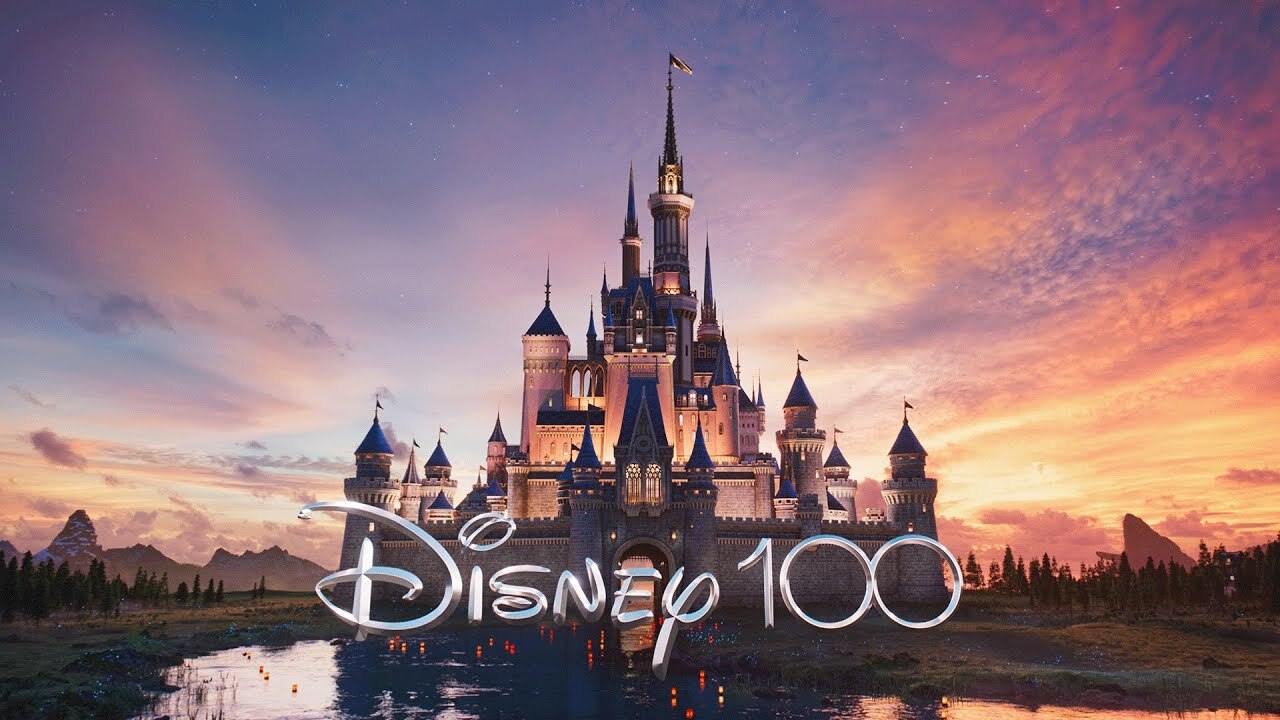
The wordmark anchored the system. Trollbäck+Company kept the historic Disney signature lettering, derived from Walt Disney's own handwriting, and added a plus sign in a contrasting weight to signify the streaming product within the wider company architecture. An arc traced over the wordmark referenced the curved arrow of a satellite transmission and lent the static logo a sense of motion. The identity was first presented to investors at the Disney Investor Day on April 11, 2019, and was refined for the public launch later that year.
An elastic system rather than a fixed mark
Beyond the logo itself, the studio designed a dynamic visual language that translated the warm, hand drawn curves of the original Disney wordmark into a flexible system of organic shapes. The shapes were used to frame trailers, title cards, programming blocks, and end card animations, giving the platform a recognisable rhythm across its content and advertising. The intent was to evoke the craft, artistry, and animation history at the heart of Disney without limiting the platform to a single illustrative style.
Trollbäck+Company also developed the comprehensive style guide and animation toolkits that allowed Disney's international teams and external partners to execute the identity consistently across markets. The system needed to flex across content from Walt Disney Studios, Pixar, Marvel, Lucasfilm, and National Geographic, while remaining unmistakably Disney+.
Strategic positioning
Disney+ entered a streaming market dominated by Netflix and competing with Amazon Prime Video, Apple TV+, and the imminent HBO Max. The brand architecture deliberately placed Disney's signature script at the centre, signalling that the platform was the home for the company's intellectual property rather than a separate technology brand. The plus form provided a visual handle that could later extend to additional services and bundled offers without disrupting the parent wordmark.
The launch attracted ten million sign ups in its first 24 hours, a figure that briefly took the service offline. By the end of its first year, Disney+ had recorded more than 86 million subscribers, well ahead of internal projections that had targeted 60 to 90 million by 2024. The visual identity played a structural role in that scale, providing a coherent framework for a service that needed to feel both new and immediately familiar.
Written with AI assistance, edited by a human. Find out more about our Use of AI.