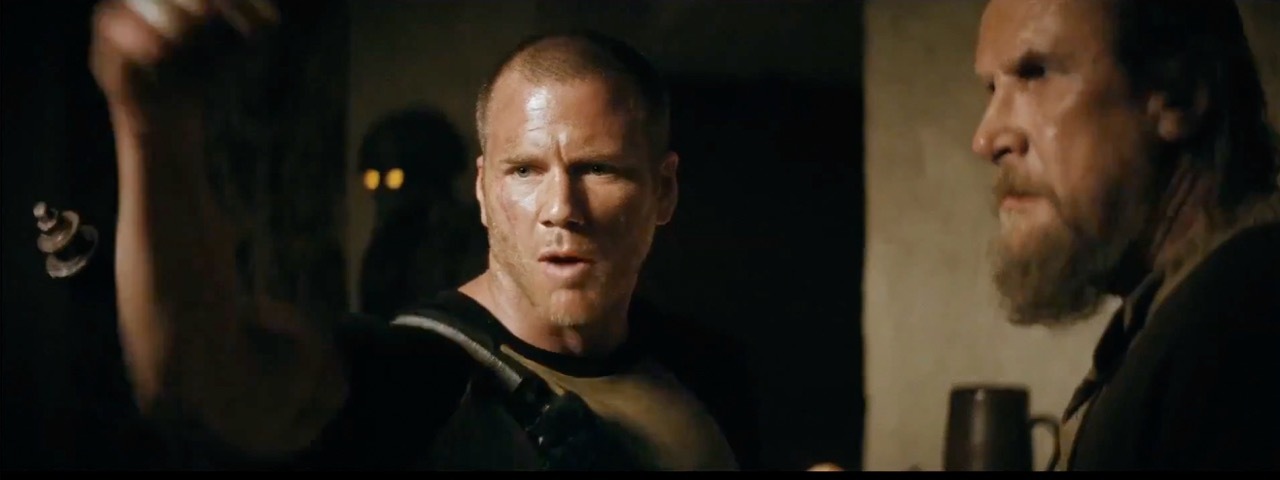

A confessional set to Fauré, with no gameplay in sight
In September 1999, Sony Computer Entertainment Europe released Double Life, a 60 second television commercial for the original PlayStation. The film opened on a parade of 19 unremarkable looking people, photographed in documentary style and intercut with brief flashes of imagined warriors and dignitaries. Each character spoke one fragment of a single confessional monologue describing two parallel lives, the visible one of jobs and routines, and the secret one of conquest, command, and adventure inside the PlayStation. No gameplay footage appeared. No product was shown until the very last frame.
The work was created by TBWA London, with copywriter James Sinclair, art director Ed Morris, and creative director Trevor Beattie, and directed by Frank Budgen through Paul Weiland Film Company. The score was the "Pie Jesu" from Gabriel Fauré's Requiem, an unexpectedly sacred backdrop for a video game advertisement. The combination of solemn music, ordinary faces, and an absent product collapsed every convention of late-1990s console marketing.
A culture, not a catalogue
The strategic problem TBWA inherited was familiar to anyone selling consumer technology in 1999. Sony's competitors, Nintendo and Sega, were running product-led advertising that focused on individual game titles, frame rates, and cartridge volume. The screens of those spots were filled with sprites and explosions and on-screen text. Sony Computer Entertainment Europe, working with TBWA, took the opposite turn. Double Life sold PlayStation as a culture, a private practice carried by a community of adults whose hobby happened to be invisible from the outside.
The shift mattered because it changed what the brand was selling. The product on shelves was a grey plastic console. The product on television was a way of life. By withholding gameplay footage, the spot let viewers fill the screen with their own games, their own avatars, and their own private mythology. The brand promise was not "this console is faster than the competitors", it was "this console understands who you really are".
The line that worked as a manifesto
Beattie's monologue carried one line that did most of the heavy lifting: "For 10 hours a week, I am Caligula, queen of a small fishing town in Cornwall, an explorer of the lost city of Atlantis." The structure invited substitution. Every viewer could complete the sentence with their own secret identity, and the spot's grammar made the substitution feel natural rather than imposed. The line read as a confession rather than a slogan, which was rare in 1999 advertising and rarer still in console marketing.
The form also worked as a manifesto for adult gaming at a moment when the medium was still publicly coded as a children's pastime. The 19 characters in the film were variously a pensioner, a businessman, a young woman in a hijab, a security guard, a rabbi. The casting was deliberate. PlayStation was claiming a constituency that broader culture had not yet acknowledged.
Awards and afterlife
Double Life entered the awards circuit immediately. It won a Wood Pencil at D&AD in 1999, a Gold at the British Television Advertising Awards the same year, and a Silver Lion in Film at Cannes in 2000. Industry tallies named it the most awarded campaign of 1999 and 2000. Its reputation extended well past its broadcast life. The spot circulated through agency reels, media studies syllabuses, and best-of compilations for the next two decades, and it remained a reference point for any brief that asked for an idea about identity rather than product.
The spot also reset what Sony Interactive Entertainment expected from its brand voice. Subsequent platform advertising, including the Mountain (2003) and Welcome Changes (2003) work for the PlayStation 2, the PlayStation 3 launch creative, and eventually BBH New York's Greatness Awaits (2013) for the PlayStation 4, all owed something to Double Life's basic decision to position the platform above the products. The endline of each generation changed. The principle did not.
Why it still teaches
Double Life is now a quarter of a century old, but it continues to be cited in pitch theatre and brand strategy decks for one specific reason. It demonstrated that the most powerful thing a category leader can do is refuse to play the category's own visual game. Where competitors showed product, Sony showed people. Where competitors raised volume, Sony lowered it. Where competitors edited fast, Frank Budgen held shots. Each of those decisions was a brand bet, not a craft choice.
The work also stands as evidence of what happens when an advertiser, an agency, and a director all agree to trust an audience. There is no on-screen text explaining what PlayStation does, no voiceover translating the monologue into product benefits, no super listing the launch titles. The spot ends with the PlayStation logomark and the line "Do not underestimate the power of PlayStation". That is the entire selling argument. In 1999, and arguably still today, it was enough.
Source: PlayStation Europe Youtube
Written with AI assistance, edited by a human. Find out more about our Use of AI.