Starbucks as a Cultural Icon in Hollywood
By the late 1990s, Starbucks had become highly visible in American popular culture, frequently appearing in films and television without paying for product placement. The company was increasingly approached by producers who saw its stores and branding as instantly recognizable symbols of modern urban life.
This cultural visibility made Starbucks a natural fit for comedic and satirical references in entertainment media.
Dr. Evil’s Starbucks in the Space Needle
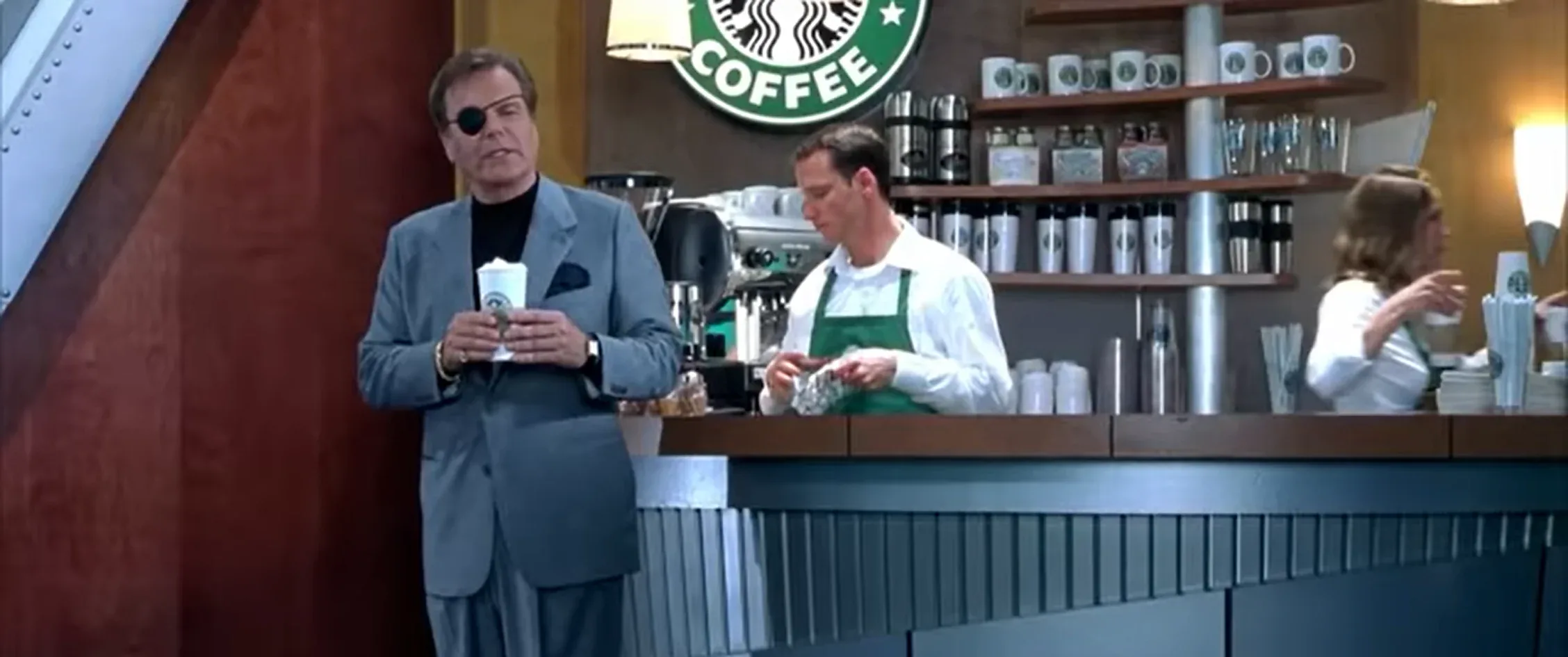
In Austin Powers: The Spy Who Shagged Me (1999), Starbucks appeared in one of the film’s most memorable settings. The villain Dr. Evil used the Space Needle in Seattle as his headquarters, and within it, a Starbucks store was depicted as part of his lair, complete with baristas in green aprons.
The film also included a storyline in which Dr. Evil’s organization had profited by investing in a small startup coffee chain—implied to be Starbucks—linking the brand humorously to his world-domination schemes.
A Brand That Entered Everyday Fiction
Starbucks had already appeared in other major productions such as You’ve Got Mail and television shows like Ally McBeal, where its cups and stores were used as visual shorthand for contemporary urban culture.
By the time of Austin Powers, the brand’s presence in entertainment had become so familiar that it could be used as a comedic device without explanation.
Humor, Risk, and Brand Acceptance
Although the association with a fictional villain carried some risk, Starbucks accepted its inclusion in the film. The company noted that it had little control over how it was portrayed but valued the broader exposure and cultural relevance it gained from such appearances.
Starbucks representatives emphasized that the brand was increasingly seen as part of everyday American life, making it both highly visible and widely recognizable in media.
A Symbol of Everyday Capitalism in Pop Culture
Ultimately, Starbucks’ appearance in Austin Powers reflected its transformation from a coffee retailer into a cultural symbol. Its stores, branding, and ubiquity made it an easy reference point for filmmakers exploring modern consumer culture.
The use of Starbucks in a comedic villain’s lair underscored how deeply the brand had entered public consciousness, becoming both a familiar setting and a satirical shorthand for globalization and corporate presence.
Source: Hak K Youtube
Written with AI assistance, edited by a human. Find out more about our Use of AI.