
Quick Facts
Year Introduced: 1990
Complexity: Medium
Best For: FMCG brands, product brands, multi-brand portfolios
How the Unilever Brand Key Works
The Unilever Brand Key is a positioning model developed in the mid-1990s by Unilever, one of the world's largest consumer goods companies. As the portfolio grew through acquisitions and international expansion, Unilever needed a standardized framework to define and align all of its brands across markets and teams ¹. The result was a single, visual model shaped like a keyhole that could be applied to any product brand in the portfolio, from Dove to Knorr to Axe. The accompanying internal manual ran to roughly 60 pages, instructing business units worldwide on how to define their respective brands ².
What sets the Brand Key apart from most positioning frameworks is its dual orientation. It does not only look inward at what the brand stands for. It explicitly builds the competitive environment, target audience, and consumer insight into the model itself ³. This makes it one of the few frameworks that directly bridges brand identity and market reality in a single view.
The model is organized across three layers.
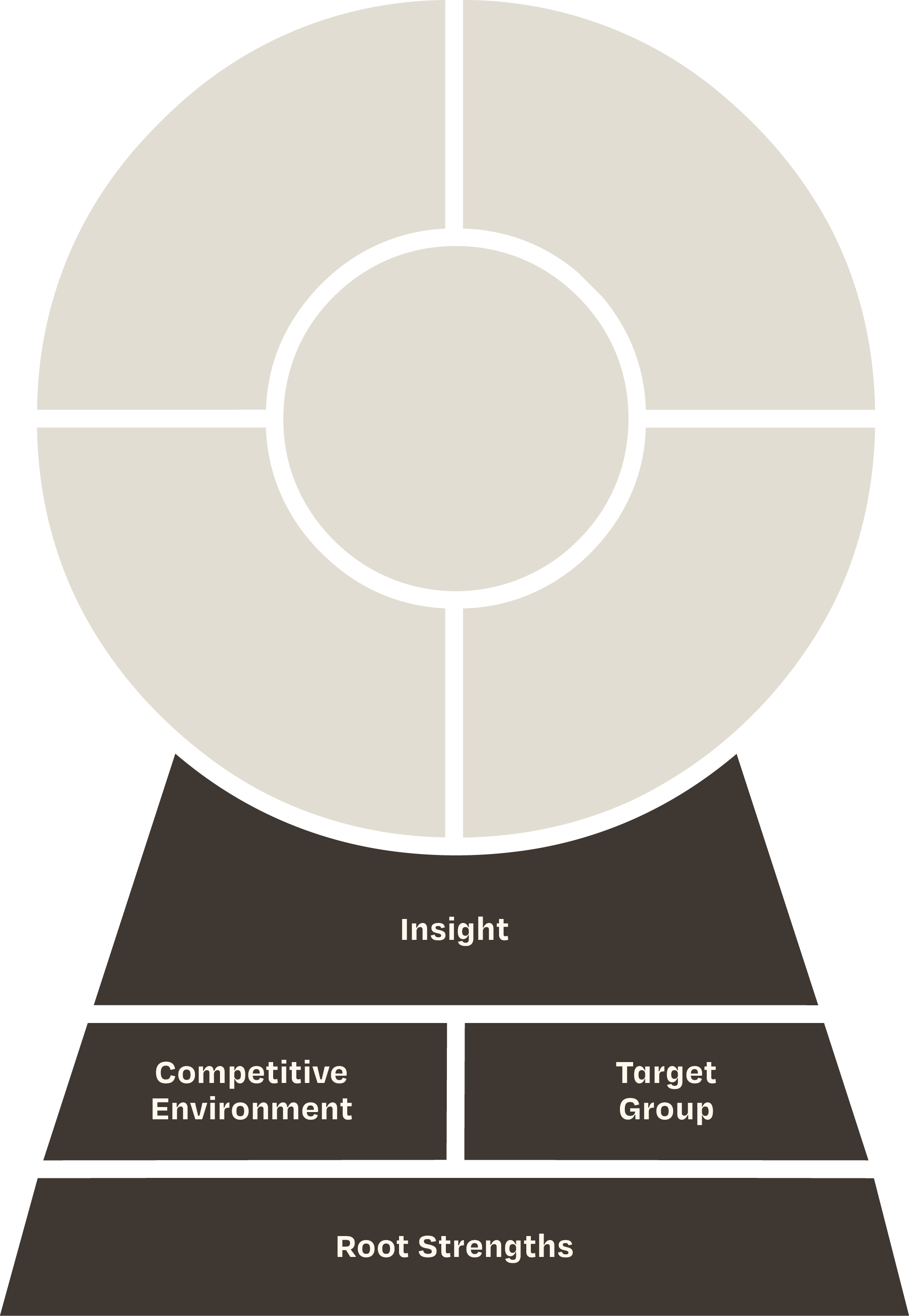
Market level
The outer layer grounds the brand in its competitive context. It contains three elements.
Competitive environment defines the landscape of direct and indirect competitors. Not just brands in the same product category, but any alternative that addresses the same consumer need ³. A chocolate bar competes not only with other chocolate brands but potentially with any snack or small indulgence.
Target group describes the intended audience, ideally going beyond demographics into attitudes, values, and behavioral patterns ³. The Brand Key encourages teams to paint a vivid picture of who the brand is for, not just in terms of age and income, but in terms of how these people see the world.
Consumer insight is the most distinctive element at this level. It asks for a surprising, often hidden truth about what the consumer actually needs or feels, something that conventional market research might miss ⁴. A good insight reveals a tension, a contradiction, or an unmet desire that the brand is uniquely positioned to address. This element is what makes the Brand Key particularly useful for communication strategy: a strong insight becomes the creative springboard for campaigns.
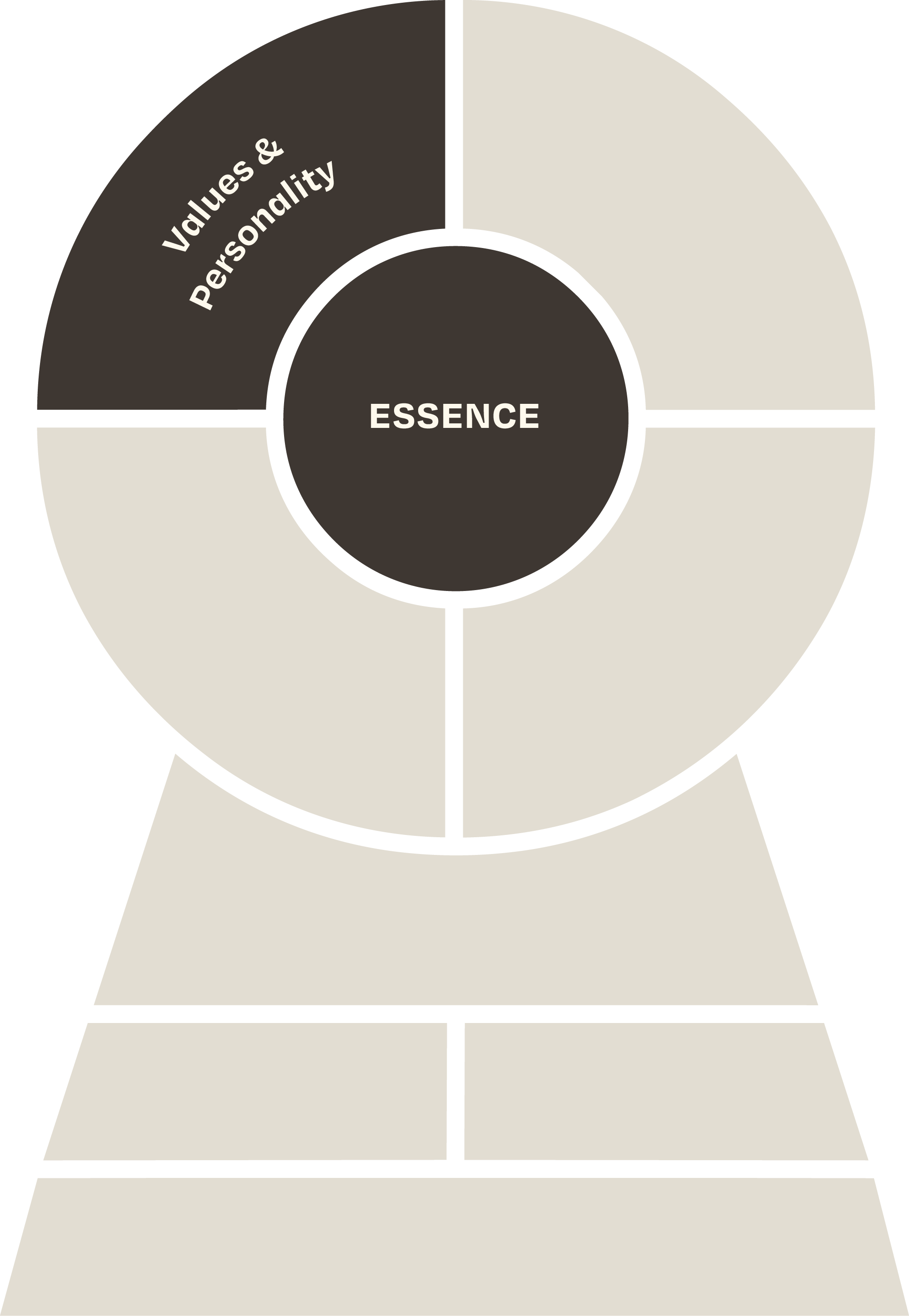
Brand level
The middle layer defines the brand's character and identity.
Brand essence sits at the very center of the model. It captures the brand's core meaning in the fewest possible words ³. Everything else in the framework should point toward and be consistent with this essence.
Values and personality describe the ethical and emotional DNA of the brand. Values indicate what the brand stands for and how it guides its decisions ⁵. Personality shapes how the brand communicates, its tone, style, and public demeanor ⁵. Together, they form the brand's character in the minds of consumers.
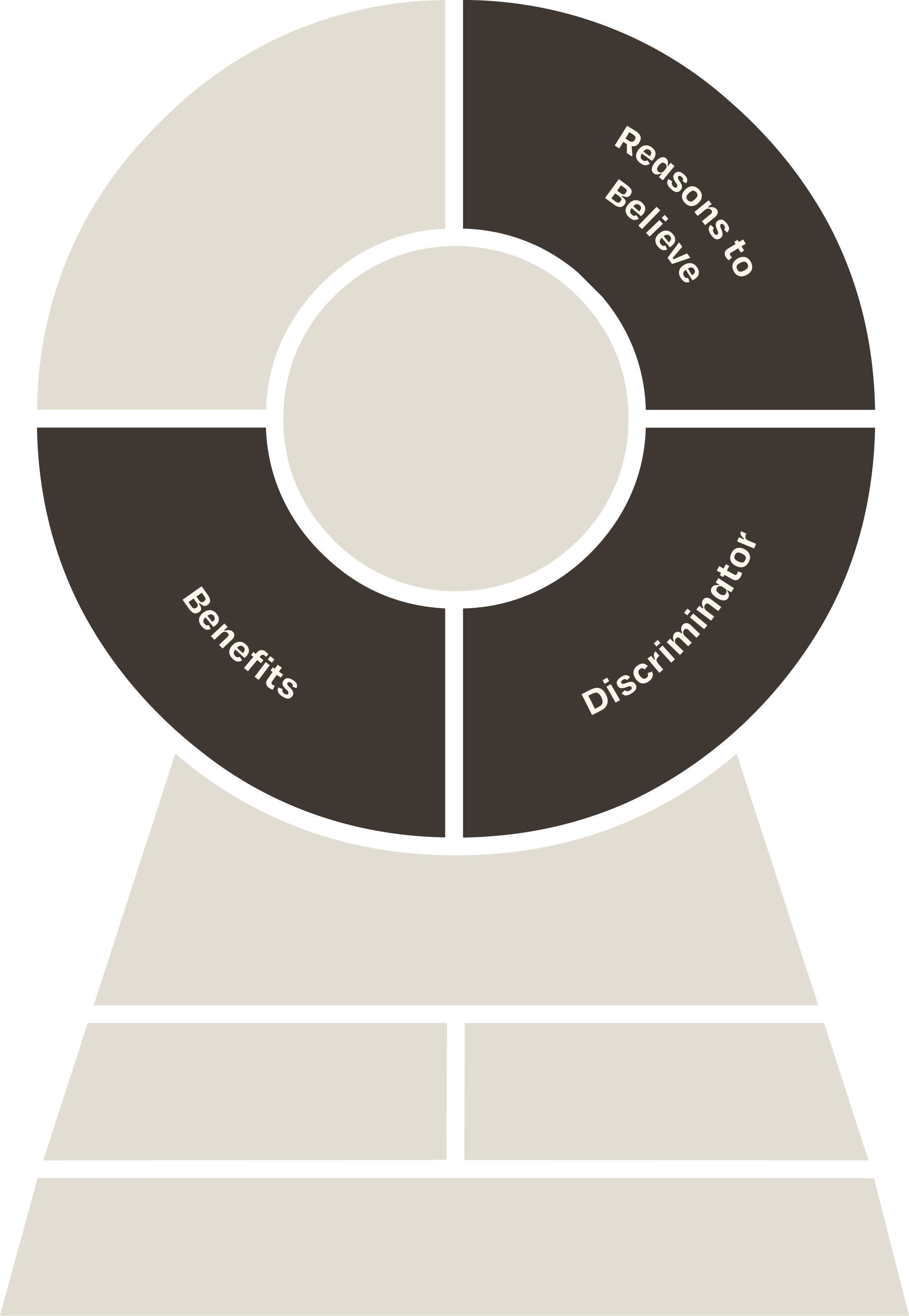
Product level
The inner layer connects the brand to its tangible offering.
Benefits describe both the functional and emotional value the brand delivers ⁵. What does it do for the consumer, and how does it make them feel? Successful positioning requires being precise about both dimensions.
Discriminator is the single most compelling reason a consumer would choose this brand over any alternative ³. It does not have to be the same as the benefits listed above. It represents the tipping point, the decisive factor in the purchase decision. Importantly, the discriminator may not always be fully conscious to the consumer ⁶.
Reason to believe provides the proof. It answers the question: why should the consumer trust this promise? This can be a product feature, a heritage claim, a certification, or any credible evidence that makes the brand's promise believable ³.
Strengths and Limitations
What makes it powerful
The Brand Key's greatest strength is its completeness for product brand positioning. By integrating market context (competitors, target, insight) with brand identity (essence, values, personality) and product reality (benefits, discriminator, RTB) into a single page, it gives teams everything they need to brief an agency, align a global launch, or evaluate whether a campaign is on-brand.
It is also battle-tested at extraordinary scale. Unilever applied this model across hundreds of brands in dozens of markets over multiple decades ¹. That kind of real-world stress testing is rare among positioning frameworks. The model has since been adopted by other corporations, agencies, and business schools precisely because it works under pressure ⁷.
The inclusion of the consumer insight is particularly valuable. Many brand models stop at defining what the brand is. The Brand Key forces teams to also articulate what the consumer needs ⁴, creating a natural bridge between brand strategy and creative execution.
Where it falls short
The Brand Key was designed for product brands in fast-moving consumer goods. It works exceptionally well in that context, but it shows its limits when applied to corporate brands, service brands, or purpose-driven organizations where the line between product and company blurs.
The model has no dedicated space for brand purpose, vision, or long-term ambition. It is fundamentally a positioning snapshot: precise and actionable, but static ⁸. For brands navigating fundamental strategic shifts, cultural movements, or category disruption, the Brand Key captures where you are but not where you're going.
The discriminator concept, while sharp in theory, can be difficult to pin down in practice ⁶. In categories where functional differences are minimal, identifying a single decisive factor often becomes an exercise in aspiration rather than observation.
The Brand Key in Practice
Dove is perhaps the clearest illustration of the Brand Key at work within Unilever's own portfolio. The consumer insight, that beauty advertising makes most women feel worse about themselves rather than better, became the foundation for the entire "Real Beauty" platform. The brand essence (real beauty), the benefit (confidence through authenticity), and the RTB (real women, not models, in every campaign) all lock together precisely as the model intends.
Axe/Lynx demonstrates the same framework applied to a completely different audience and tone. The insight that young men feel insecure about their attractiveness drove a positioning built around confidence and seduction. Every element of the Brand Key, from the discriminator (irresistibility) to the personality (provocative, playful), was calibrated to a specific target with surgical precision.
Knorr shows the model working in a less glamorous but equally instructive category. The insight that home cooks want to feel like they're making something from scratch, even when using convenience products, shaped a positioning around real ingredients and cooking inspiration rather than speed or ease. The Brand Key kept the brand from falling into the "just add water" trap that plagues the category.
Sources
¹ Bruce, A. & Jeromin, C. (2016). Agile Markenführung: Wie Sie Ihre Marke stark machen für dynamische Märkte. Springer Gabler. ISBN 978-3-658-11808-2
² Kapferer, J. (2012). The New Strategic Brand Management: Advanced Insights and Strategic Thinking. 5th Edition. Kogan Page. S. 171, 179
³ Brand Holosphere (2018). "Unilever Brand Key – Positionierung von Produktmarken." brandholosphere.com/brand-key
⁴ Baumann, S. (2011). Brand Planning – Starke Strategien für Marke und Kampagnen. Schäffer-Poeschel Verlag. S. 27–31
⁵ Meffert, H. et al. (Hrsg.) (2005). Markenmanagement – Grundfragen der Identitätsorientierten Markenführung. 2. Ausgabe. Gabler Verlag. S. 7–8, 79
⁶ Esch, F. (2010). Strategie und Technik der Markenführung. Vahlen. S. 104
⁷ Duncker, C., Röseler, U. & Fichtl, L. (2015). "Marken-Positionierung: Auf der Suche nach verlässlichen Instrumenten." In: Absatzwirtschaft 12/2015, S. 76–79
⁸ BESTVISO GmbH (2020). "Der Brand Key im digitalen Zeitalter." bestviso.com/brand-key-im-digitalen-zeitalter
